
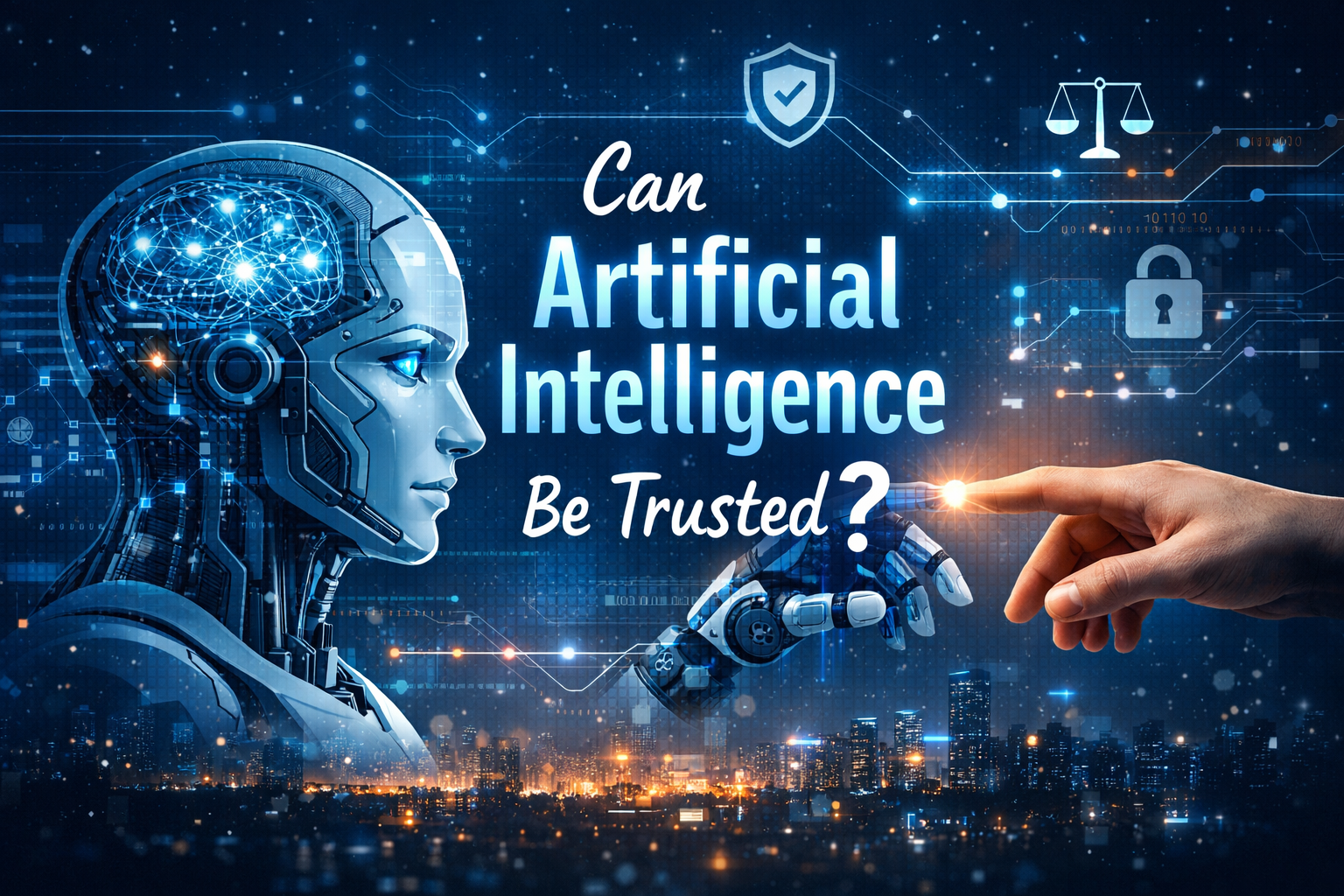
Artificial Intelligence (AI) has rapidly become a core part of our daily lives, from virtual assistants and recommendation engines to autonomous vehicles and healthcare diagnostics. However, a pressing question arises: Can Artificial Intelligence Be Trusted? Trust in AI is not just a technical issue—it is also ethical, social, and economic.
Understanding AI Trustworthiness
Trust in AI depends on its reliability, transparency, and fairness. For instance, AI systems in business or healthcare must deliver accurate results consistently. Yet, AI can make errors due to biased data, flawed algorithms, or unexpected real-world conditions. Companies offering AI solutions, like PetsaaL Technologies, emphasize rigorous testing and monitoring to ensure dependable outcomes.
Transparency is another critical factor. Users are more likely to trust AI if they understand how it works. Explainable AI (XAI) methods help break down complex decisions into understandable reasoning, reducing skepticism and increasing accountability.
The Risks That Challenge AI Trust
Despite its potential, AI also introduces risks:
- Bias and Fairness: AI trained on biased datasets can unintentionally perpetuate inequalities.
- Security Concerns: AI systems can be vulnerable to hacking or adversarial attacks.
- Accountability Gaps: Determining responsibility for AI-driven decisions can be complicated.
By acknowledging these risks, organizations can implement safeguards, ethical guidelines, and monitoring systems to improve trust. For example, integrating robust data validation and continuous learning frameworks can help mitigate errors.
Real-World Applications Where Trust Matters
AI is already shaping industries, but trust remains critical:
- Healthcare: AI assists in diagnosing diseases, but patients must trust the technology before accepting recommendations. Learn more about our web solutions for healthcare businesses.
- E-commerce: AI-driven recommendation engines boost sales but must respect user privacy. Our social media marketing services incorporate AI responsibly.
- SEO & Marketing: AI helps optimize websites for search engines. At PetsaaL Technologies, we ensure AI tools enhance rather than compromise your digital strategy.
Building Trust in AI
Trust is built through transparency, accountability, and user-centric design. Companies should provide clear explanations of AI decisions, ensure fairness, and actively prevent misuse. Education also plays a role—users who understand AI’s limitations and capabilities are more likely to trust it.
At PetsaaL Technologies, we integrate AI thoughtfully into our solutions, from web development to marketing, making sure technology enhances user experience without compromising trust.
Conclusion
So, can AI truly be trusted? The answer is yes, with careful oversight. AI can be a powerful ally in business and daily life, but trust requires transparency, accountability, and ethical implementation. By understanding both the benefits and risks, we can create a future where AI works for humanity reliably and responsibly.
Explore more insights on technology and AI in our blog or reach out via Contact Us to see how PetsaaL Technologies can help your business leverage AI safely and effectively.
Outgoing Links:
Internal Links: